Ormsby Hill: A Chronological History
From the booklet written by Mary Hard Bort – January 1998 (edited for clarity and order December 2026)
Early Settlement of Manchester (1761–1764)
Manchester was chartered in 1761 by Colonial Governor Benning Wentworth of New Hampshire. The original grantees soon sold their rights to a group of settlers from Amenia, New York. Before arriving, these proprietors carefully organized their town: they laid out one-hundred-acre lots, traded and consolidated landholdings, elected officers, and selected two men—Jeremiah French and Gideon Ormsby—to come ahead and lay out the first roads.
The Amenia settlers arrived in 1764. Among the earliest were Gideon Ormsby, Benjamin Purdy, Richard Skinner, and members of the Isham and Canfield families. The long slope of today’s Route 7A, rising from Wilcox Flats to the crest of the hill, became known as Ormsby Hill or Purdy Hill, reflecting the prominence of those early landowners.
Gideon Ormsby and the Revolutionary Era
Gideon Ormsby, son of the wealthy landowner Jonathan Ormsby, quickly emerged as a leader in the new settlement. He served as Manchester’s first town treasurer, represented the town at regional conventions, and was elected to the Vermont Legislature, where he served for seventeen years.
During the American Revolution, Ormsby served with distinction, rising to the rank of Major and earning recognition as a Revolutionary hero. While he was frequently absent, his wife Mercy Ormsby managed the farm and raised their twelve children. The Ormsby farm lay on the west side of the main road, about halfway up the hill, and included fertile land and an apple orchard. During the war, Tories attempted to burn the orchard while Mercy was alone.
Mercy Ormsby, along with the wives of other Revolutionary soldiers, played a key role in organizing Manchester’s Congregational Church. Though Gideon himself was not religious, he lent his strong support to the effort.
Gideon Ormsby died in 1804 at age sixty-eight. By then, all of his children had settled elsewhere. He had invested heavily in land rather than cash, leaving Mercy little financial security. The original Ormsby house burned around 1808.
Benjamin Purdy and the Purdy District
Another early settler, Benjamin Purdy, owned land primarily on the east side of the highway, stretching from the base of the hill to its crest. Benjamin and his wife Deborah raised twelve children. When Deborah died in 1804, ninety-three descendants marched in her funeral procession.
Over time, Purdy distributed his land among his sons. Much of it remained in the family well into the twentieth century, and the area became known as the Purdy District, with its own school, the Purdy District School. Though less politically active than Ormsby, Benjamin Purdy and his sons served as fence-viewers, path-masters, and selectmen, while remaining primarily farmers.
The Purdy Family Line and Thompson Purdy (1795–1832)
Benjamin’s descendants intermarried with other Amenia families—Hatch, Mead, Bullis, Roberts, Sutherland, and Powel. His son Reuben Purdy married Anna Powel, daughter of Martin Powel, Manchester’s first town clerk and keeper of the Marsh Tavern.
Reuben and Anna had eleven children, including twins Thompson and Rhoda, born in 1795. Thompson married Eleanor Collins and became a farmer. In 1823, he purchased eleven acres for $70, and in 1826, acquired an additional 105 acres from his father for $2,000. This land lay at the top of the hill on the east side of the highway.
The property became known as the Thompson Purdy Farm. An 1825 storekeeper’s ledger reveals Thompson’s regular purchases of household staples—and generous quantities of rum and tobacco. He also earned income hauling marble to Troy and returning with salt.
In 1832, Thompson sold the farm for $1,875 to Major Hawley and moved to Ohio. One account notes that “he did not prosper.”
From Hawley to Isham (1832–1885)
The farm remained in the Hawley family for thirty-seven years, used as rental property, until it was sold in 1869 to Levi Lampson for $3,000. In 1885, local attorney Loveland Munson purchased the property for $3,000 and immediately transferred it to Edward Swift Isham of Chicago.
The Isham Family Roots
Edward Swift Isham descended from Dr. Ezra Isham, who came to Manchester around 1800 from Connecticut. Ezra purchased land on the west side of the main road from Richard Skinner, later Governor of Vermont. He practiced medicine in Manchester and married Nancy Pierrepont, daughter of the owner of the Pierrepont Tavern.
Their eldest son, Pierrepont Isham (born 1802), attended Burr Seminary, studied law under Judge Richard Skinner, and became a distinguished jurist, eventually serving on the Vermont Supreme Court.
Edward Swift Isham (1836–1902)
Edward Swift Isham was born in 1836 in Bennington. He attended Burr Seminary, Lawrence Academy, and Williams College, graduating Phi Beta Kappa in 1857. After studying law with his father and at Harvard, he moved to Chicago in 1858, where he built an extraordinary legal career.
In 1872, Isham formed the law firm Isham & Lincoln with Robert Todd Lincoln, son of President Abraham Lincoln. The firm later became Isham, Lincoln & Beale, specializing in major corporate and railroad litigation.
Despite his demanding career, Isham remained deeply attached to Vermont.
Creation of Ormsby Hill (1885–1894)
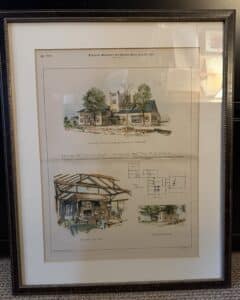
After purchasing the Thompson Purdy Farm in 1885, Isham transformed it into a grand summer estate named Ormsby Hill. He worked with architect F. W. Stickney to remodel the house, add a tower, verandas, barns, greenhouses, a sugarhouse, stone walls, and modern water and electrical systems.
The estate became a social and cultural center, hosting prominent guests including Robert Todd Lincoln, Mrs. Ulysses S. Grant, and other national figures. Isham was generous to Manchester institutions, supporting the Congregational Church, Dellwood Cemetery, Mark Skinner Library, and Burr & Burton Seminary.
Tragedy and Later Years (1894–1902)
In 1894, Isham’s wife Frances died after a fall on ice at Ormsby Hill. Despite this loss, Isham continued improving the estate and contributing to the community.
He played a major role in founding the Ekwanok Country Club, serving as its first president and donating the Isham Cup.
Edward Swift Isham died in February 1902 in New York City. He was buried in Dellwood Cemetery beneath a monument he had commissioned.
Ormsby Hill After Isham
After his death, the estate continued as a summer home for his descendants. Family tragedies followed, including the loss of Ann Eliza Isham on the Titanic in 1912 and the death of Edward Pierrepont Isham in 1929.
In 1944, the Hardyman family established a trust that transformed Ormsby Hill into a summer camp—and later a year-round home—for underprivileged boys, many of whom went on to college and successful lives.
Modern Era and Preservation (1985–Present)
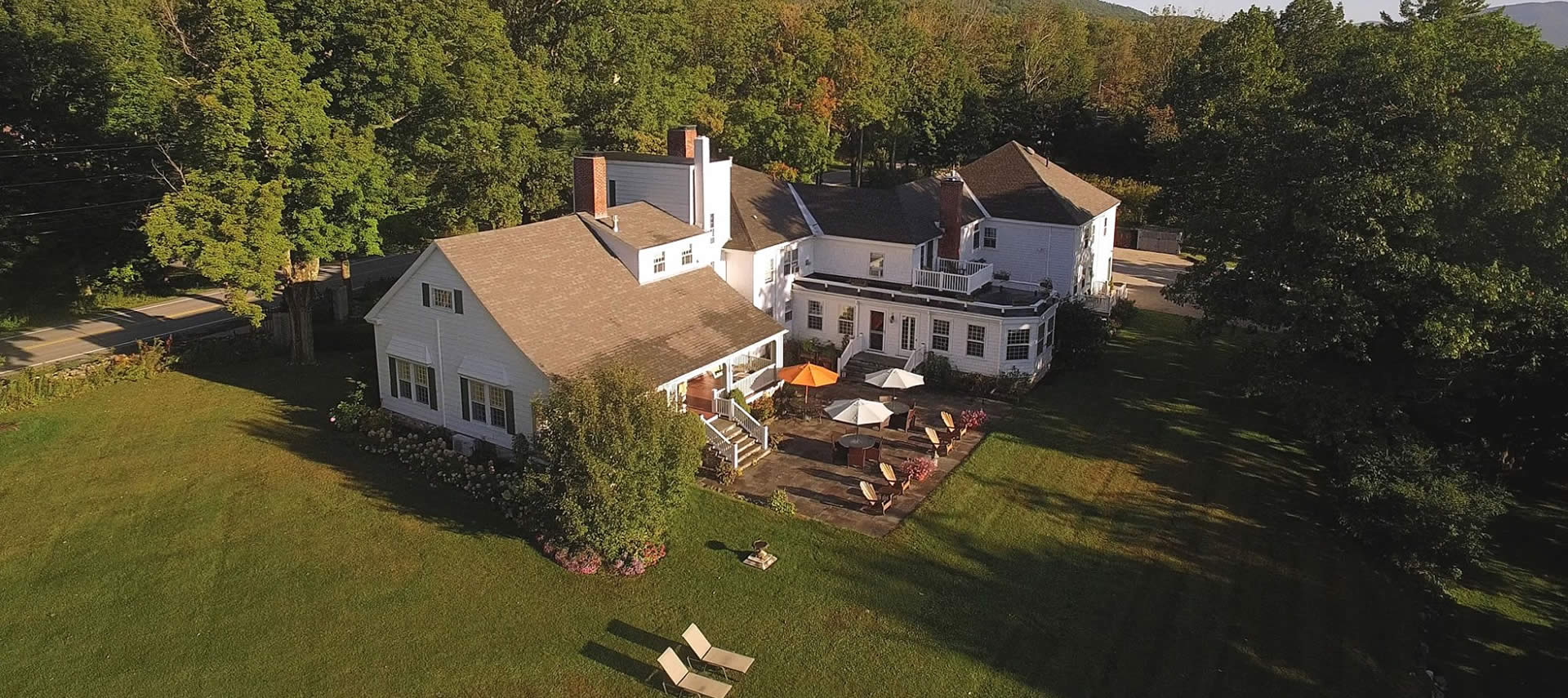
In the 1980s, administration of the trust passed to Burr & Burton Seminary, and the main house was eventually sold. In 1987, Ormsby Hill became a bed-and-breakfast inn, undergoing careful renovation while retaining its historic character.
Today, Ormsby Hill stands as a testament to over two centuries of Manchester history—shaped by settlers, statesmen, philanthropists, families, and generations of children who found refuge, learning, and joy on its grounds.
Timeline of Ormsby Hill
17th–18th Century Foundations
- 1674 – William Randolph emigrates from England to Virginia
- 1678 – Randolph marries Mary Isham, establishing the Isham–Randolph line later connected to Thomas Jefferson
- 1761 – Manchester chartered by Gov. Benning Wentworth
- 1764 – Settlers from Amenia, NY arrive; Gideon Ormsby and Benjamin Purdy among the earliest
Revolutionary Era
- 1775–1783 – American Revolution
- Gideon Ormsby serves with distinction, rising to Major
- Mercy Ormsby manages the farm and helps organize the Congregational Church
- 1804 – Deaths of Gideon Ormsby and Deborah Purdy
- c. 1808 – Original Ormsby house burns
The Purdy Years
- 1795 – Birth of twins Thompson Purdy and Rhoda Purdy
- 1823 – Thompson Purdy purchases 11 acres
- 1825 – Thompson appears in storekeeper’s account book
- 1826 – Thompson acquires 105 additional acres
- 1832 – Thompson Purdy sells the farm and moves to Ohio
Transition of Ownership
- 1832–1869 – Farm owned by Major Hawley family (rental property)
- 1869 – Sold to Levi Lampson
- 1885 – Purchased by Edward Swift Isham
The Isham Era
- 1836 – Birth of Edward Swift Isham
- 1857 – Isham graduates Phi Beta Kappa from Williams College
- 1858 – Moves to Chicago; begins law career
- 1872 – Forms law firm Isham & Lincoln with Robert Todd Lincoln
- 1885 – Isham purchases Thompson Purdy Farm
- 1887–1889 – Major construction and remodeling at Ormsby Hill
- 1888 – Modern sugarhouse completed
- 1894 – Death of Frances Isham after fall on ice
- 1895 – Notable dinner party at Ormsby Hill
- 1897 – Mark Skinner Library dedicated
- 1899 – Isham elected first president of Ekwanok Country Club
- 1902 – Death of Edward Swift Isham
After Isham
- 1905 – Robert Todd Lincoln occupies Hildene
- 1912 – Ann Eliza Isham dies in the Titanic sinking
- 1929 – Death of Edward Pierrepont Isham
- 1944 – Ormsby Hill Trust established as children’s summer camp
- 1954 – Year-round residential program begins
- 1985 – Trust administration transferred to Burr & Burton Seminary
- 1987 – Ormsby Hill becomes a bed-and-breakfast inn
- 1989 – Isham stained-glass window presented to Harvard University
Family Trees
The Ormsby Family
Jonathan Ormsby
└── Gideon Ormsby (c.1736–1804) ── Mercy Ormsby
├── 12 children (all later settled elsewhere)
The Purdy Family
Benjamin Purdy ── Deborah Purdy (d.1804)
└── Reuben Purdy ── Anna Powel
├── Thompson Purdy (1795–after 1832) ── Eleanor Collins
│ └── 5 children
└── Rhoda Purdy (1795– ) ── (moved to Ohio)
The Isham Family (Manchester Line)
Henry Isham
└── Mary Isham ── William Randolph
└── Randolph lineage
└── Jane Randolph ── Peter Jefferson
└── Thomas Jefferson
The Isham Family (Ormsby Hill Line)
Dr. Ezra Isham ── Nancy Pierrepont
└── Pierrepont Isham (1802–1877) ── Samantha Swift
├── Edward Swift Isham (1836–1902) ── Frances Burch
│ ├── Ann Eliza Isham (1862–1912)
│ ├── Pierrepont Isham (1865–1906)
│ ├── Edward Swift Isham Jr. ── Laura Miller
│ │ ├── Frances P. Isham ── Dr. Paul Colonna
│ │ ├── Edward Pierrepont Isham (1903–1929)
│ │ └── Susan D. Isham ── Hugh Hardyman
│ └── Frances Isham ── Henry Shelton
└── Mary Isham ── Maj. Sartell Prentice
The Hardyman Legacy
Susan Isham ── Hugh Hardyman
└── Pierrepont Hardyman (d.1944)
└── Memorial Trust → Ormsby Hill children’s programs
American Architect and Building News – June 22, 1889